The Sixth Chamber
Chamber 6
Hell as Spiritual Death
Classification:
Roman Catholic Doctrine

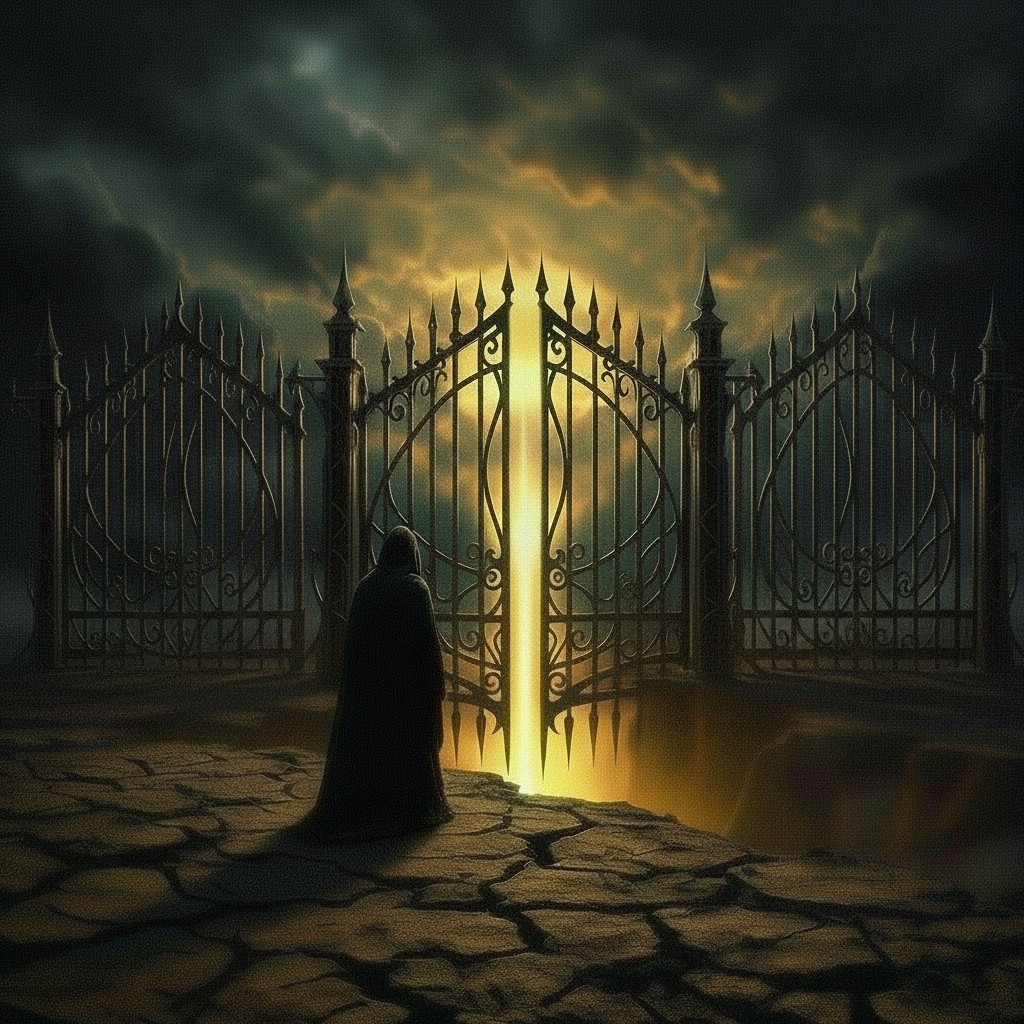
Within Roman Catholic theology, hell is understood not only as a state of punishment but, more profoundly, as a condition of spiritual death—the complete and eternal separation of the soul from the life of God. While Catholic doctrine affirms the biblical imagery of fire, darkness, and judgment, it teaches that these images ultimately point to a deeper spiritual reality. Since God is regarded as the source of all life, truth, goodness, beauty, and love, to be forever separated from Him is to exist in a state of spiritual death. This condition is not the annihilation of the soul but the permanent loss of sanctifying grace, divine communion, and the beatific vision. According to Catholic teaching, those who freely and knowingly reject God through unrepented mortal sin ultimately choose this separation for themselves, making hell the tragic consequence of a life lived apart from God's saving grace.
The foundation for this doctrine is found throughout Scripture, where sin is repeatedly associated with death. Jesus describes eternal life as knowing and abiding in God, while the Apostle Paul teaches that "the wages of sin is death." The Book of Revelation speaks of the "second death," and Catholic theology understands this not merely as physical destruction but as the soul's eternal alienation from God after the Final Judgment. Drawing upon the writings of early Church Fathers such as Augustine and later theologians like Thomas Aquinas, the Catholic Church teaches that spiritual death reaches its fullest and most irreversible expression in hell, where the soul forever loses the possibility of repentance, reconciliation, and union with God.
The Catechism of the Catholic Church teaches that the greatest suffering of hell is "eternal separation from God, in whom alone man can possess the life and happiness for which he was created." Although traditional imagery such as fire and darkness remains part of Catholic teaching, these images are generally understood as expressing the profound reality of spiritual deprivation rather than merely physical torment. The loss of God's presence, the absence of hope, and the irreversible awareness of what has been rejected constitute the deepest agony of hell. This understanding has shaped Roman Catholic theology, spirituality, and moral teaching for centuries, emphasizing both God's infinite mercy and the seriousness of human freedom. Hell as spiritual death serves as a solemn reminder that eternal life is found only in communion with God, while eternal separation from Him represents the ultimate tragedy of the human soul.
The defining horror of this chamber is not extinction, but existence deprived of the Beatific Vision and communion with God.
The Holy Bible
The concept of spiritual death has its roots in both the Old and New Testaments, where sin is portrayed as separating humanity from God, the source of life. Early Church Fathers, especially St. Augustine, emphasized that eternal punishment consists primarily in the soul's alienation from God rather than physical suffering alone. During the medieval period, St. Thomas Aquinas further developed this teaching by distinguishing between the "pain of loss" (poena damni)—the deprivation of the Beatific Vision—and the "pain of sense" (poena sensus), traditionally associated with the imagery of fire. These theological distinctions were later incorporated into official Catholic teaching and remain central to the Church's understanding of hell today.
The Catholic understanding of hell as spiritual death has profoundly influenced Christian philosophy, theology, literature, and sacred art. Rather than focusing exclusively on physical punishment, Catholic writers and mystics have often portrayed hell as the soul's deepest deprivation—the irreversible loss of God's presence and the fulfillment for which every human being was created. This perspective shaped the works of theologians, spiritual writers, and artists throughout the Middle Ages and continues to influence modern discussions about free will, divine justice, mercy, and the eternal destiny of the soul.
You have crossed the chamber of spiritual death: a vision of hell defined by the loss of grace, communion, and the Beatific Vision. The archive continues into the next chamber, where another tradition of the afterlife waits beyond the gate.
Enter Chamber 7 →AI-Assisted Content Notice: Portions of this entry were drafted with assistance from ChatGPT (OpenAI, 2026) and subsequently edited for accuracy, clarity, and theological consistency.