Overview
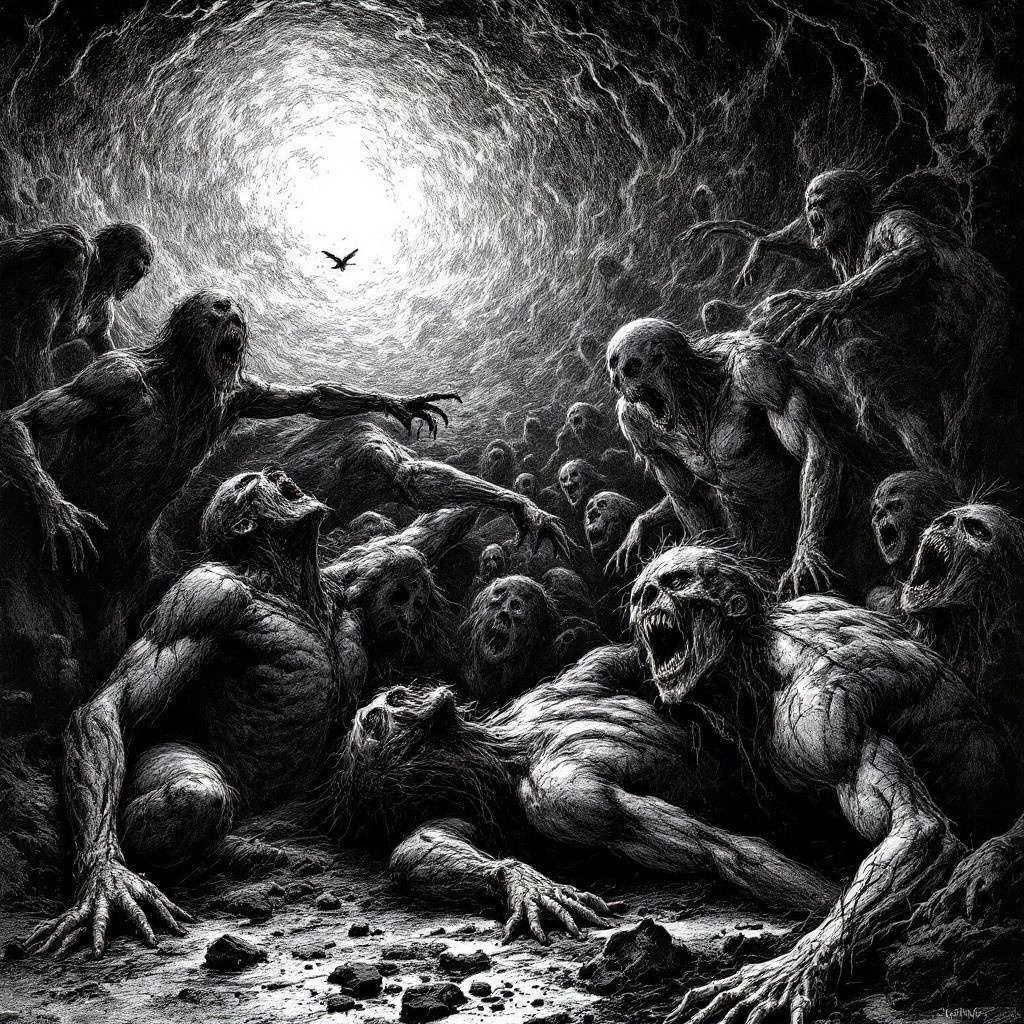
Among the many descriptions of hell found in the New Testament, one of the most haunting is Jesus' portrayal of “outer darkness,” a place characterized by weeping and gnashing of teeth. Unlike the fiery imagery of Gehenna or the Lake of Fire in the Book of Revelation, outer darkness emphasizes isolation, exclusion, and profound spiritual despair rather than flames. Appearing primarily in the Gospel of Matthew, this expression is used in several of Jesus' parables to describe the fate of those who reject God's kingdom or fail to remain faithful. Rather than focusing on physical suffering, the imagery conveys the anguish of being permanently separated from God's presence, excluded from the joy of His kingdom, and left in a state of irreversible regret. Throughout Christian history, this image has become one of the most powerful biblical symbols of eternal loss and divine judgment.
Jesus uses the phrase “outer darkness” in connection with several parables, including the Parable of the Wedding Banquet, the Parable of the Talents, and the healing of the Roman centurion's servant. In each instance, individuals who are unworthy, unprepared, or unfaithful are cast outside into darkness, where “there will be weeping and gnashing of teeth.” The darkness stands in stark contrast to the brightly lit banquet halls and joyful celebrations within God's kingdom, emphasizing exclusion rather than participation. The repeated phrase “weeping and gnashing of teeth” expresses overwhelming sorrow, bitter regret, anguish, and recognition of what has been eternally lost.
Throughout Christian history, interpretations of outer darkness have varied. Many traditional theologians have viewed it as another description of hell itself, existing alongside the biblical images of fire, judgment, and eternal punishment. Others interpret the darkness symbolically, representing complete separation from God's light, love, truth, and fellowship. Regardless of whether understood literally or metaphorically, the image conveys the devastating consequences of rejecting God's invitation and remaining outside His kingdom. The combination of endless darkness, sorrow, and irreversible exclusion has deeply influenced Christian theology, preaching, literature, and sacred art. Unlike images dominated by fire and torment, outer darkness reminds believers that the greatest punishment may not be physical suffering but the eternal loss of communion with God, accompanied by profound remorse and the realization that the opportunity for repentance has passed forever.
Historical Development
The image of outer darkness originates in the teachings of Jesus, particularly in the Gospel of Matthew. Early Christian theologians viewed it as complementing other biblical descriptions of hell. Medieval interpretations emphasized spiritual abandonment, while modern views differ on whether the darkness is literal or symbolic.
Influence on Western Culture
The New Testament image of outer darkness has influenced Christian theology, literature, sacred art, and preaching. It introduced a vision of hell emphasizing loneliness, exclusion, and regret. The phrase “weeping and gnashing of teeth” has entered common language as an expression of extreme grief and remorse.
AI‑Assisted Content Notice: Portions of this entry were drafted with assistance from ChatGPT (OpenAI, 2026) and subsequently edited for accuracy, clarity, and theological consistency.