Overview
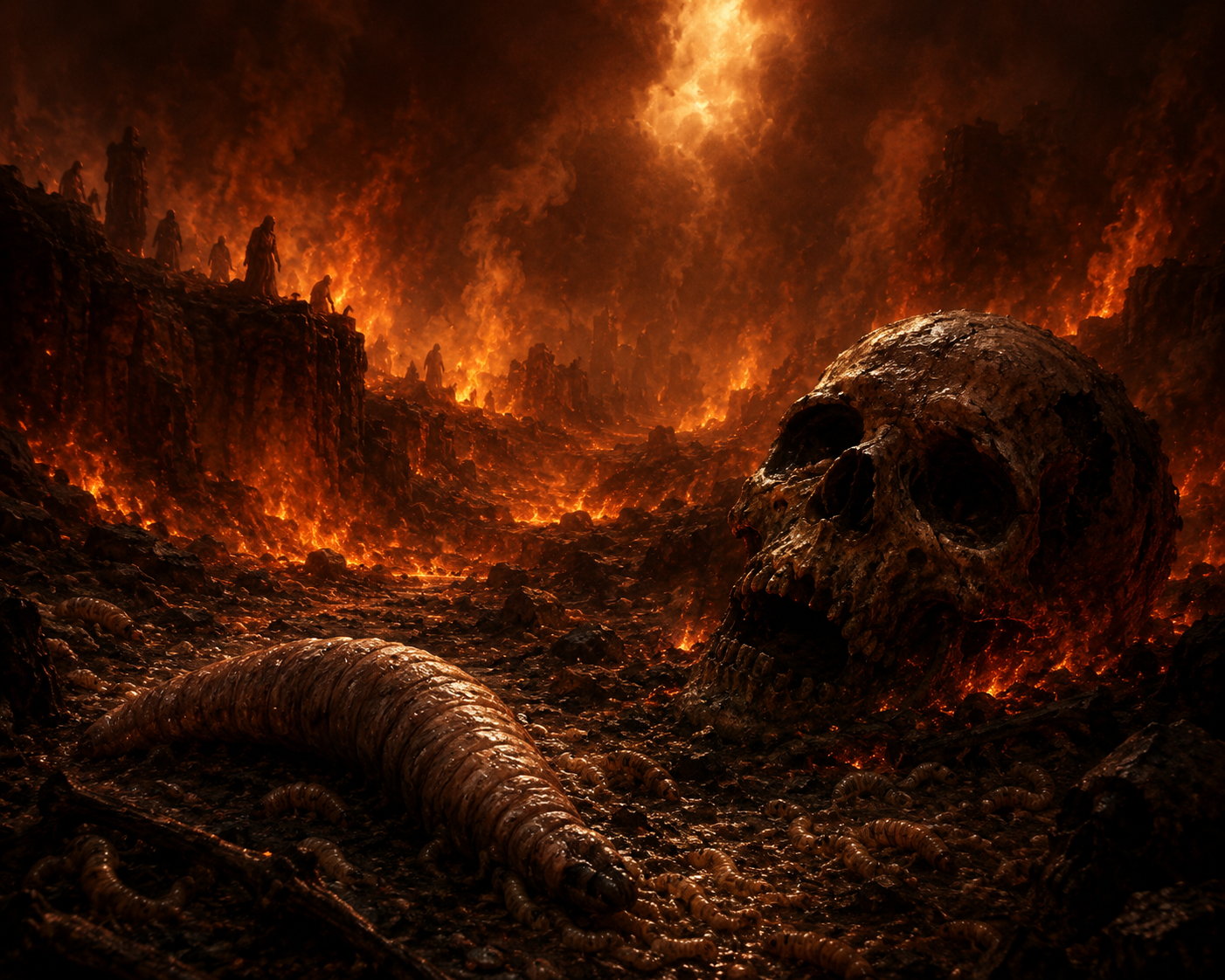
Among the most memorable and solemn warnings spoken by Jesus in the Synoptic Gospels is the description of hell as a place where "the fire is not quenched" and "their worm does not die." Unlike the apocalyptic imagery of the Lake of Fire found in the Book of Revelation, these expressions appear directly within Jesus' teachings about sin, repentance, and divine judgment. Rather than offering a detailed description of the afterlife, Jesus uses vivid and unforgettable imagery to emphasize the seriousness of rejecting God's kingdom and the eternal consequences of unrepentant sin. Throughout Christian history, these sayings have become foundational to the traditional understanding of hell and have profoundly influenced Christian doctrine, preaching, literature, and religious art.
The imagery originates in the Old Testament, specifically Isaiah 66:24, where the prophet describes the defeated enemies of God as corpses consumed by worms and unquenchable fire. Jesus applies this prophetic language to Gehenna, a term associated with the Valley of Hinnom outside Jerusalem, which had become a powerful symbol of divine judgment in Jewish thought. In the Gospel of Mark, Jesus repeatedly warns that it is better to lose a hand, foot, or eye than to be cast into Gehenna, "where their worm does not die and the fire is not quenched." Matthew likewise records Jesus speaking of "the eternal fire" and "the fiery furnace," while Luke preserves several parables portraying irreversible judgment, exclusion from God's kingdom, and the consequences of ignoring God's call to repentance.
For many Christians, the unquenchable fire represents God's holy and inescapable judgment, while the undying worm symbolizes the enduring consequences of sin, shame, and spiritual corruption. Traditional Christian theology has generally understood these descriptions as referring to eternal conscious punishment, emphasizing that the fire cannot be extinguished and the process of judgment never ends. Other Christian traditions interpret the imagery symbolically, viewing the fire as representing divine purification or complete destruction and the worm as a metaphor for guilt, decay, or the consuming effects of sin. Despite these differing interpretations, nearly all Christian traditions agree that Jesus' warnings underscore the reality of divine justice and the urgency of repentance.
For nearly two thousand years, these images have profoundly shaped Christian theology and popular imagination. Medieval artists portrayed hell as a place of consuming flames and relentless decay, while preachers throughout history used Jesus' words to encourage repentance and faithful living. The phrases "the fire that never shall be quenched" and "the worm that never dies" have become enduring symbols of judgment, reminding believers of the seriousness with which Jesus spoke about eternal consequences and humanity's accountability before God.
Historical Development
The imagery of the undying worm and unquenchable fire originated in the prophecy of Isaiah and became associated with Gehenna during the Second Temple period. Jesus adopted these familiar images to warn of divine judgment and the consequences of rejecting God's kingdom. Early Christian theologians incorporated these teachings into broader doctrines of hell, and throughout the medieval era they became central themes in sermons, theological writings, religious drama, and sacred art. Although modern Christian interpretations differ regarding whether the imagery should be understood literally or symbolically, Jesus' warnings remain among the most influential biblical descriptions of hell.
Influence on Western Culture
The teachings of Jesus concerning the unquenchable fire and the worm that never dies have had an enduring influence on Christian theology, preaching, literature, and visual art. These images inspired countless medieval depictions of hell, revival sermons emphasizing repentance, theological discussions about eternal punishment, and literary works exploring divine judgment. Even today, they remain among the most recognizable biblical descriptions of hell, continuing to shape discussions about justice, morality, and the eternal consequences of human choices.
AI‑Assisted Content Notice: Portions of this entry were drafted with assistance from ChatGPT (OpenAI, 2026) and subsequently edited for accuracy, clarity, and theological consistency.